

By William H. Kelly III & Ashley F.G. Norwood
(JACKSON, Miss.) — The first installment of Jackson State University’s (JSU) “History in Conversation,” assembled students, alumni, faculty, staff and community members for a new discussion-based series that explores institutional milestones, honors pioneers and prepares the next generation of leaders through shared wisdom.
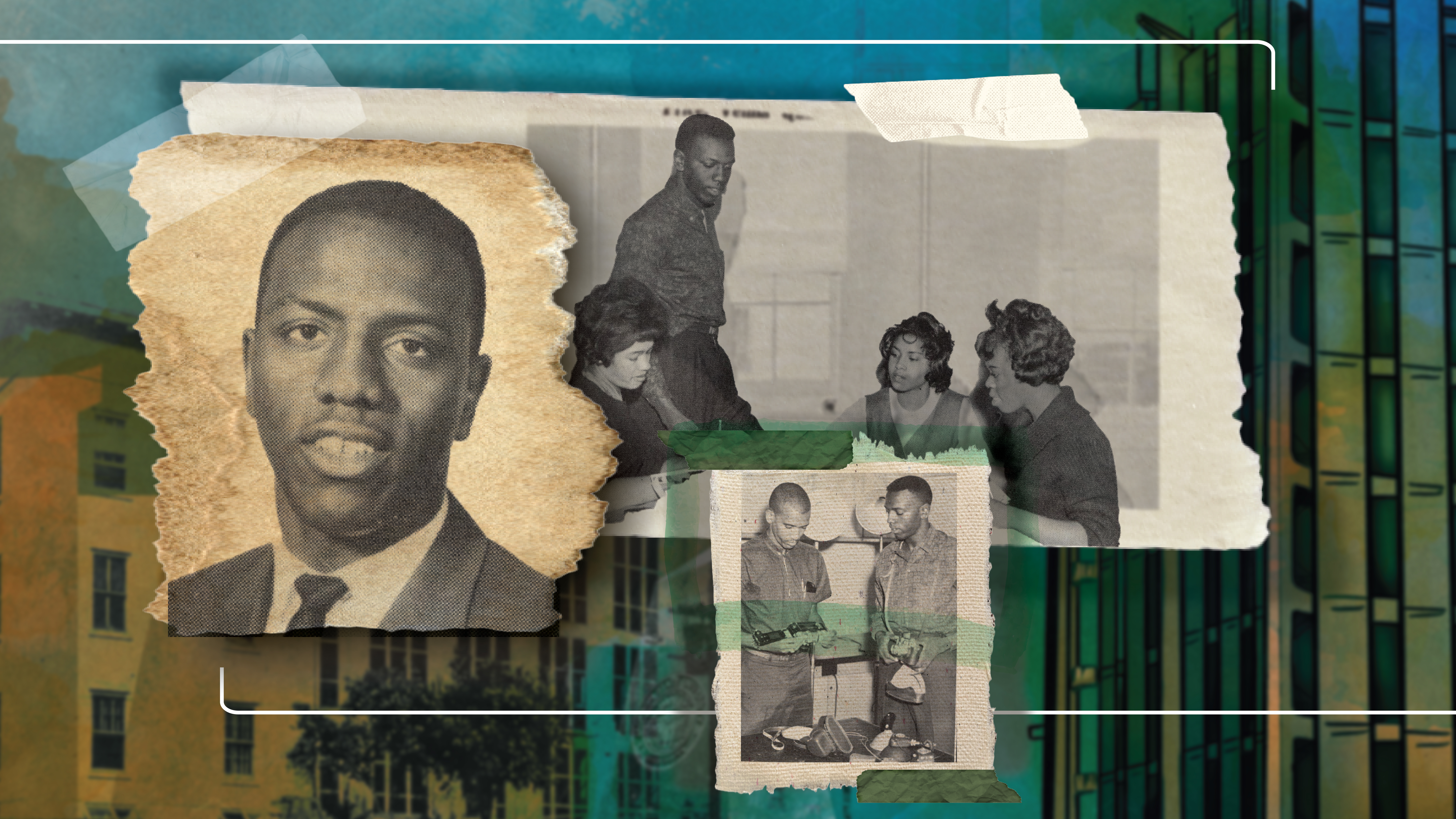
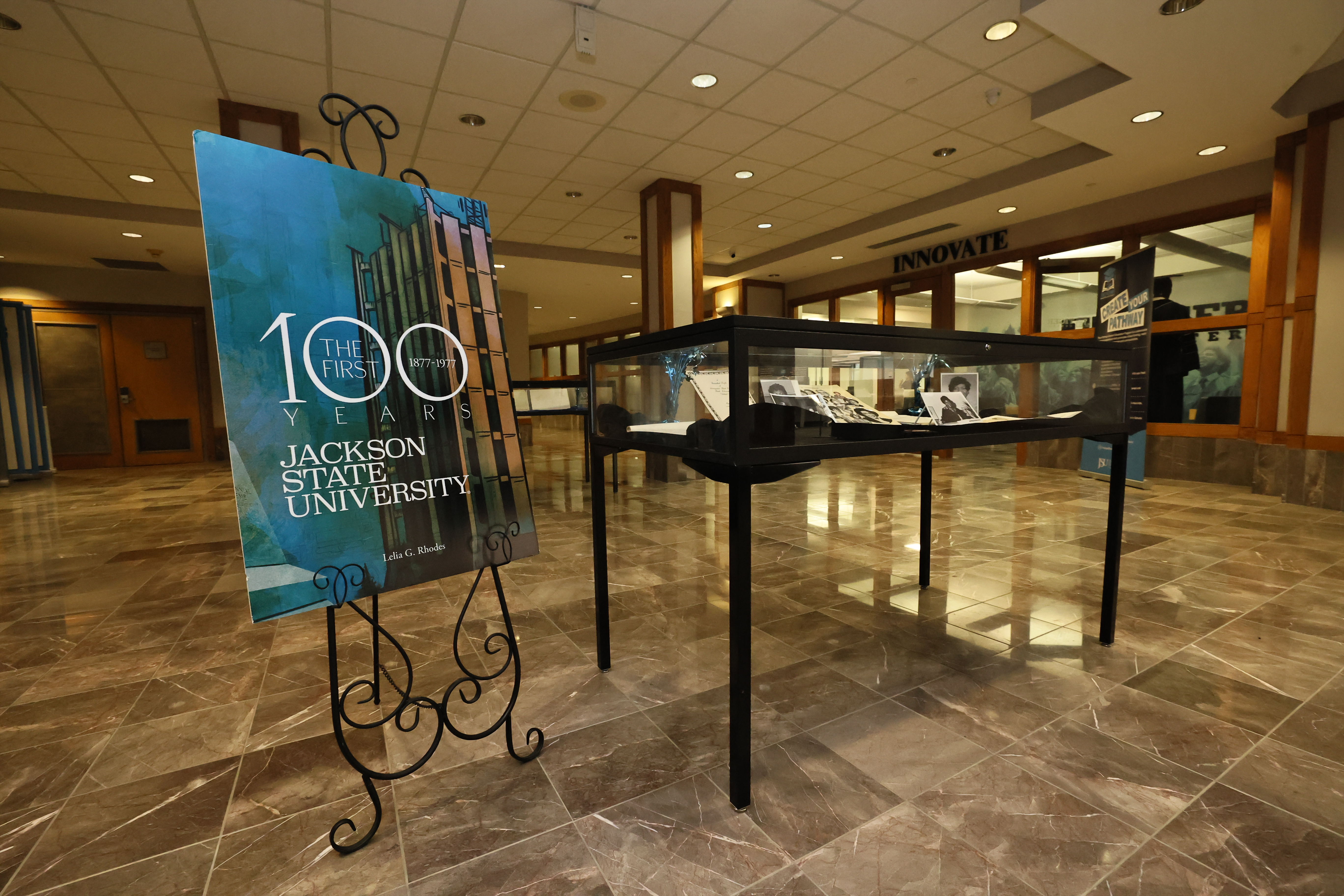
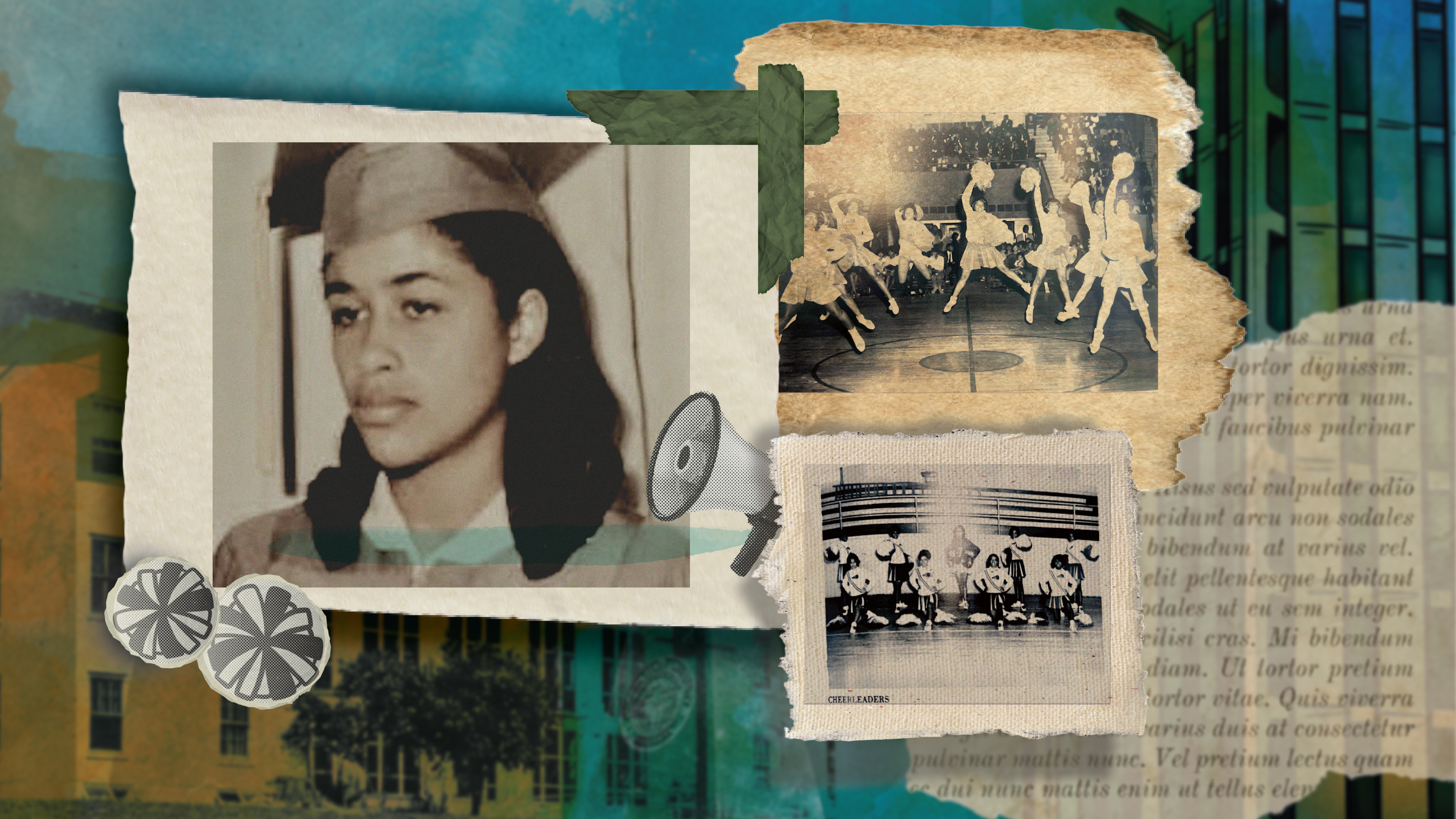
On March 31, the series’ launch “An Ode to Women’s History Month and the Trailblazer Who Documented the Institution’s First Century,” highlighted the late Lelia G. Rhodes, Ph.D., JSU’s dean emerita of libraries and the author of “Jackson State University: The First Hundred Years, 1877–1977.” The conversation, led by a panel of historians and alumni eyewitnesses, also featured an immersive exhibition of original photos and artifacts from the university’s first hundred year history.
“As she wrote our institution’s first official history, Dr. Rhodes fought breast cancer, unsure she would live to finish it. She did—and today, that history continues to educate and inspire in print, online and now sustained through digital storytelling and programming such as this,” said Ashley F. G. Norwood, director of Digital Storytelling in JSU’s Division of University Communications and founder of the new series.
Among those seated in the audience was Marilyn Rhodes Latson, daughter of Rhodes. With tears in her eyes and joy in her heart, she says she remembers growing up on campus and spending time with her mother in the library. “I can spot her handwriting from a mile away,” said Latson as she approached a display case of the book’s manuscript.
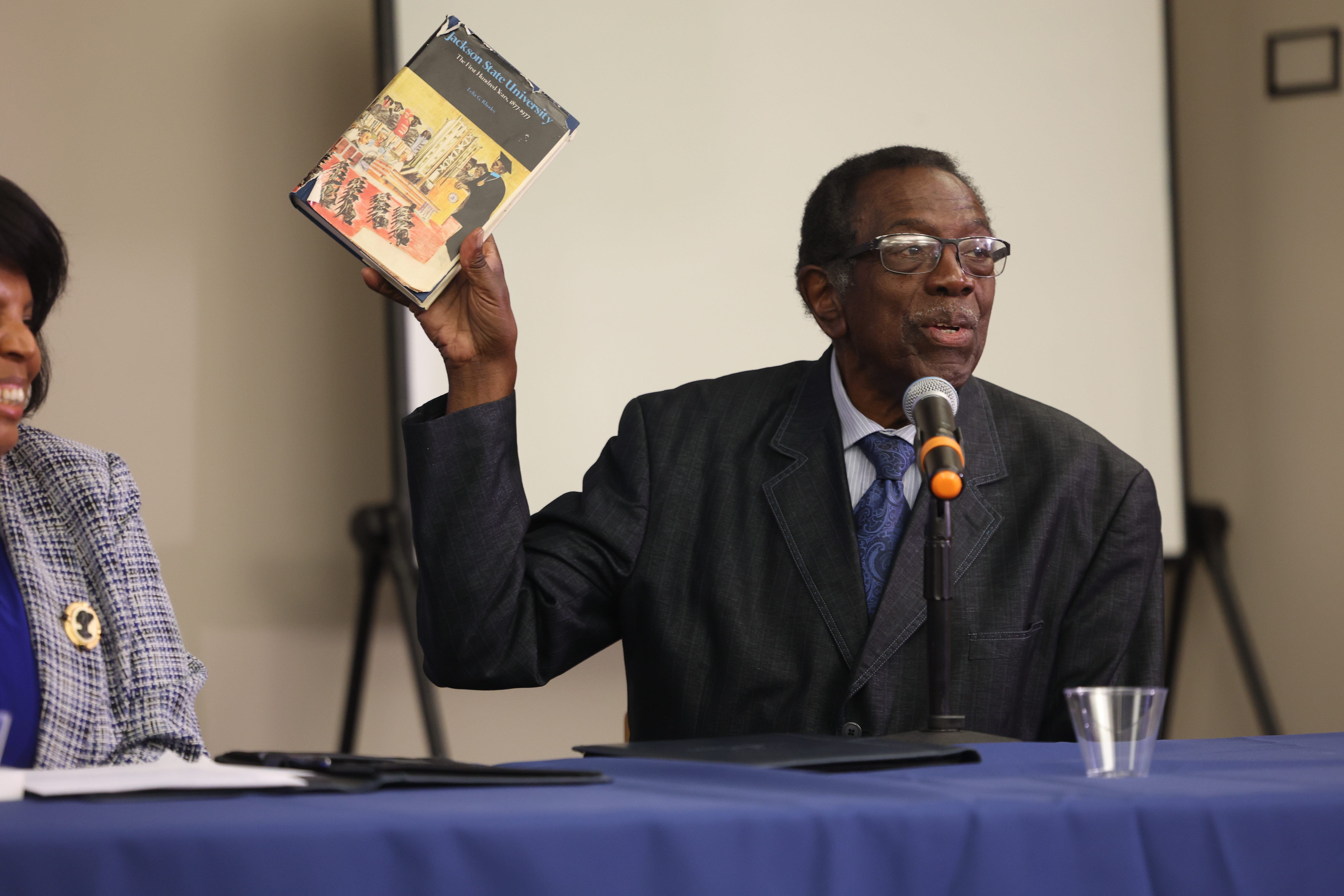
According to panelists like Hilliard Lackey, Ph.D., a longtime professor of urban higher education and lifelong learning at Jackson State, Rhodes’ love for the institution ran deep, and her impact deeper. Lackey says when he met Rhodes as a student she became an inspiration and blueprint of success for the 1965 graduate’s endeavors as an educator and dedicated alumni.
“She laid out the groundwork that this love [for the university] is continuous. It has perpetuity. It is endless love. That’s the way I feel about this university and that’s what I feel when I read this book—endless love.”
Originally published in 1979, the book traces the institution’s evolution from its founding as Natchez Seminary through its first century. Drawing on original documentation, research and archival images, it offers an in-depth look into the educational, social and institutional forces that shaped JSU’s early development.
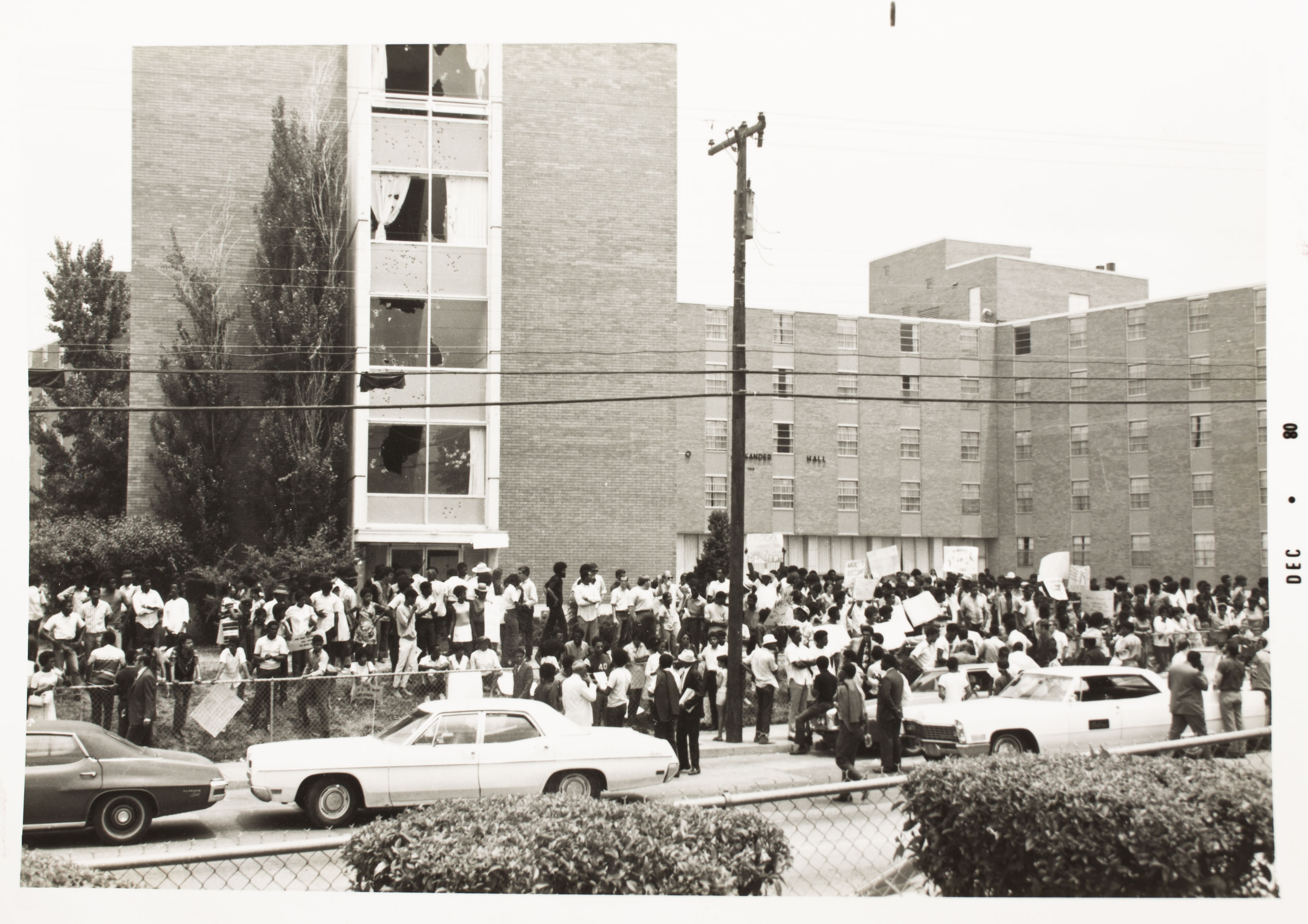
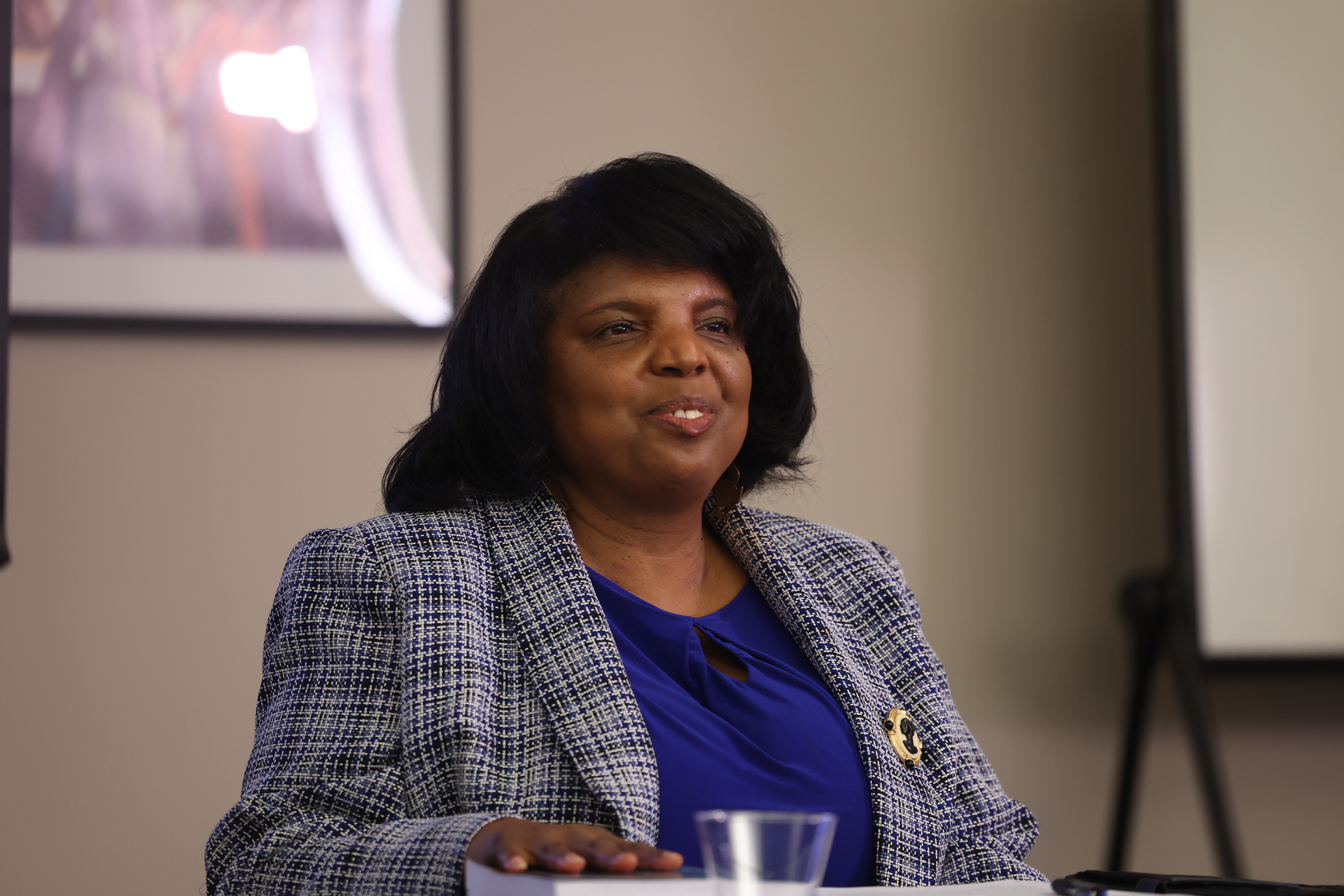
But while the book captures this history in detail, its weight was most deeply felt in the voices of those who experienced it firsthand. Gailya Porter, a 1971 graduate and survivor of the fatal shooting on campus in May of 1970 drew the audience in—moving from the memory of rolling her hair in soup cans to the harrowing moments of gunfire that left her injured. The room was silent as she shared her story of survival and the activism that came afterwards.
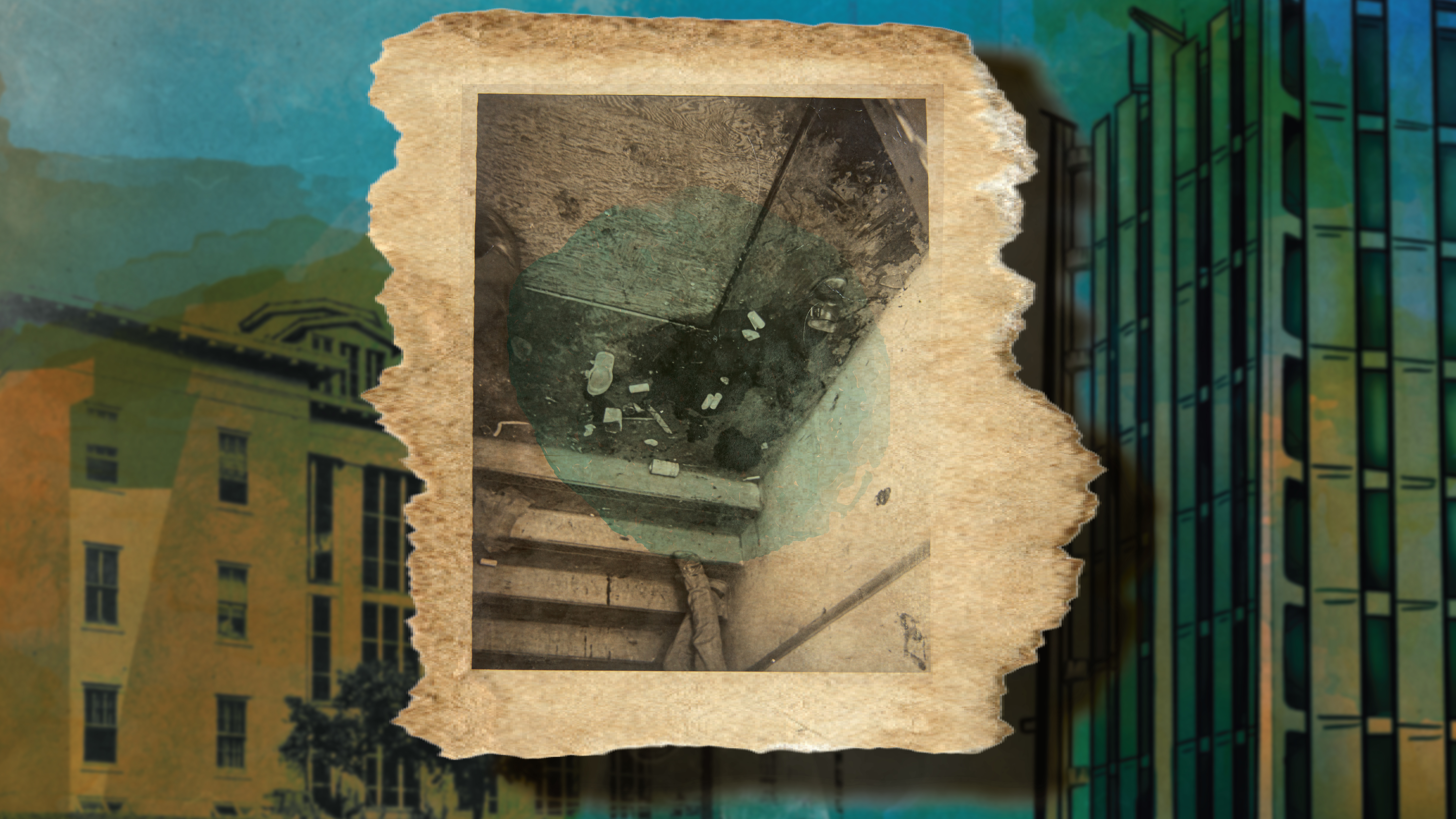
“Young people are always the vanguard of activism. They still are the vanguard of activism,” explains Robert Luckett, Ph.D., professor of history and director of JSU’s Margaret Walker Center and COFO Civil Rights Education Center.
Addressing students in the room as images from the Gibbs-Green tragedy were displayed, Luckett challenged them to continue using their voices today.
“So, the heroic student response [was] to protect the building, guard the building, and make sure evidence wasn’t removed to defend that campus. What I see when I see these students are heroic people in our history who have lived incredible lives despite the circumstances they were put under here, and a reminder to us of the strength and power of young people especially.”
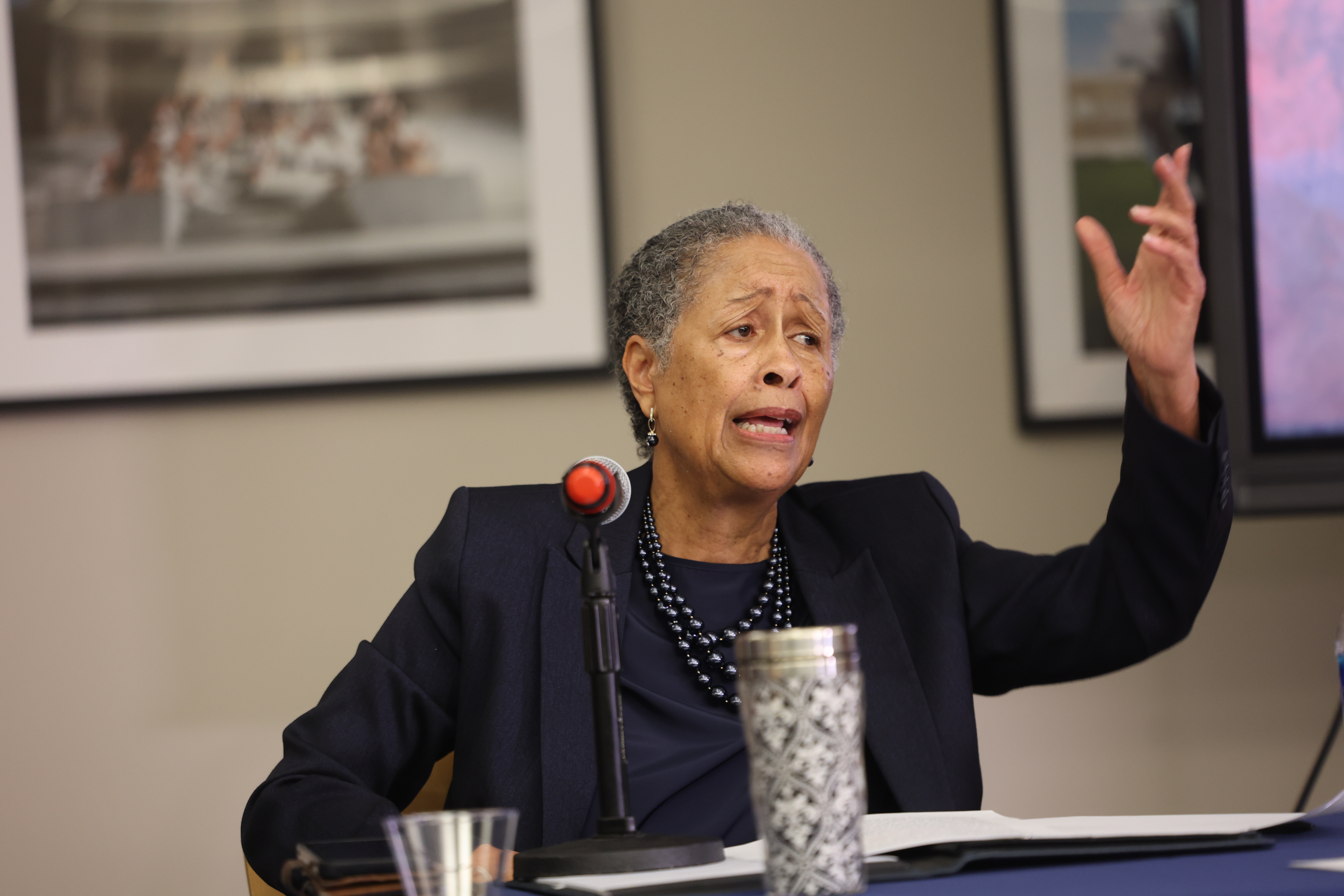

Angela Stewart, archivist at the Margaret Walker Center, said she knew Rhodes personally and described her influence as one that reached deep into local communities and extended far beyond campus.
“She was an educator, a lover of Jackson State, a graduate of Jackson State, and somebody who kept us on our toes and made sure we were doing what we were supposed to do as Jacksonians, as employees of Jackson State, as people living in the city of Jackson,” said Stewart. “She was always making sure we were doing what we were supposed to do.”
Rhodes is a past president of the JSU National Alumni Association (JSUNAA), Beta Delta Omega Chapter of Alpha Kappa Alpha Sorority, Inc., and The LeFleur’s Bluff Chapter of The Links Inc. She served more than a decade as Hinds County Election Commissioner, District 5. Most notably, Rhodes made history as the first woman and Black person to graduate with a Ph.D. in library science administration in the state of Mississippi.
The “History in Conversation” series is an initiative led by the Division of University Communications. The March event is in thanks to JSU’s College of Liberal Arts, the Margaret Walker Center, COFO Civil Rights Education Center and the Department of University Archives & Special Collections in the H.T. Sampson Library.
“Jackson State University: The First Hundred Years, 1877–1977,” will serve as an essential resource for academic and institutional programming as Jackson State prepares to celebrate its 150th anniversary, or sesquicentennial, in 2027. The publication returns back in print and available for the first time ever as an ebook, after decades of being largely limited to libraries and private collections.
“Jackson State University: The First Hundred Years, 1877–1977” is available through the University Press of Mississippi and major online booksellers.
###
Media Contact: William H. Kelly III, william.h.kelly@jsums.edu